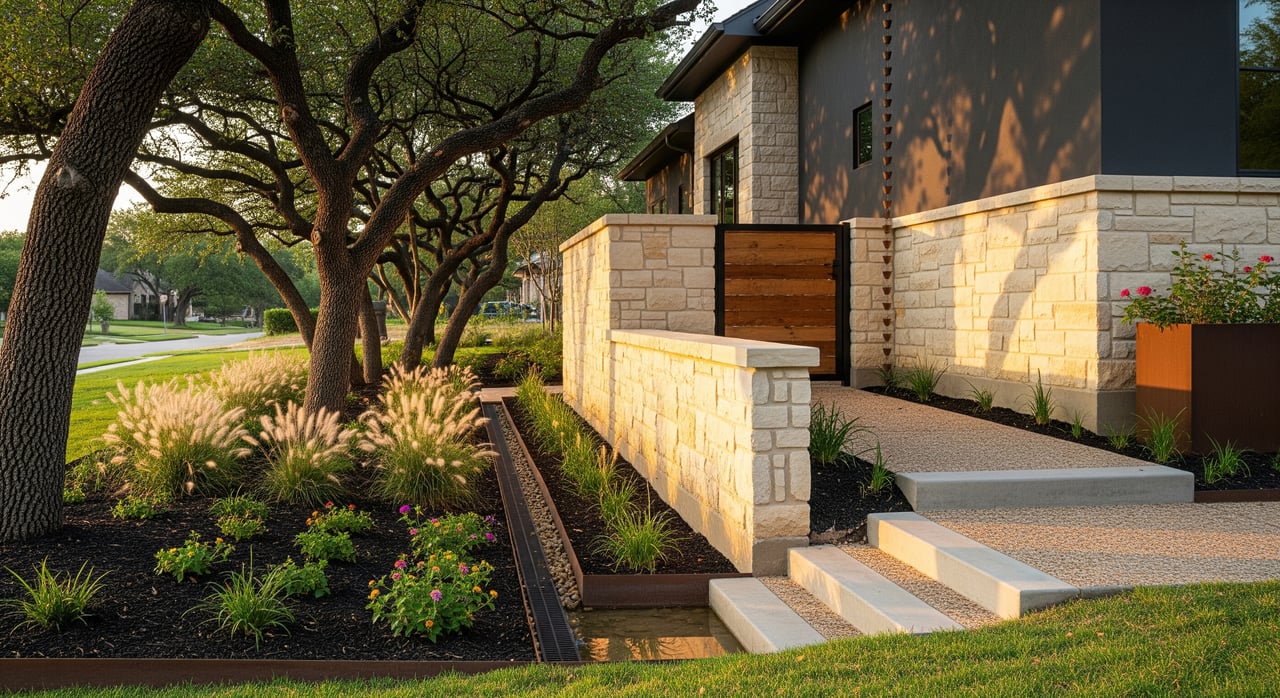
If you live in Irving, you know the soil can feel alive. One season it’s soaked after a storm, the next it’s cracked and dry. That constant change is tough on concrete slabs and pier-and-beam homes. You want curb appeal, but you also want a stable foundation and fewer repair surprises.
In this guide, you’ll learn how to design your landscape to protect your foundation on Irving’s expansive clay soils. We’ll cover grading, irrigation, plants, and hardscape choices, plus how to align with HOA rules. You’ll also see simple before-and-after concepts you can use right away. Let’s dive in.
Why Irving foundations move
Irving sits on expansive clay that shrinks when dry and swells when wet. Hot summers, sporadic heavy rains, and periods of drought can swing soil moisture from one extreme to another. That shrink–swell cycle moves the soil under and around your slab, which can stress the structure.
Common symptoms include sticking doors or windows, stair-step cracks in brick, interior corner cracks, and uneven floors. The good news is you can reduce risk by keeping soil moisture near the foundation as uniform as possible and by moving surface water away from your home.
Core design principles that work
Focus your landscape design on three goals:
- Maintain uniform, moderate moisture within 5 to 10 feet of the foundation.
- Move surface water away from the slab with consistent positive grading.
- Choose plants and hardscape that do not create moisture extremes or root pressure near the house.
The sections below translate these goals into clear, local steps.
Grading and surface drainage
Proper grading is your first line of defense. A commonly cited standard is a 6-inch drop within the first 10 feet away from the house. Treat this as a planning baseline and confirm your local code or HOA requirements.
- Create a gentle, continuous slope away from the foundation. Extend the slope as needed toward the street, a storm inlet, or a landscape feature that is sited away from the home.
- Use shallow swales or dry creek beds to collect and carry runoff across the yard. Do not aim concentrated flow at your home or a neighbor’s foundation.
- Avoid berms or barriers that trap water. If you need a retaining wall or a notable grade change, include drainage features that move water out and away.
A yard that sheds water cleanly will keep the soil around your slab more consistent and less likely to cycle between soaked and bone dry.
Irrigation and soil moisture control
Your irrigation routine shapes soil behavior right next to your home. The goal is steady, moderate moisture near the slab and no overspray on the foundation wall.
- Use drip irrigation or soaker lines in beds near the house. Drip delivers water below the surface and reduces runoff.
- Keep spray patterns off the foundation and the first 1 to 3 feet of soil next to the slab. Adjust or cap heads that hit brick or siding.
- Water lawns deeply and less often to encourage deeper roots, but keep moisture near the slab consistent. This balance is important in North Texas summers.
- Extend downspouts several feet from the foundation, typically 6 to 10 feet, or connect to underground lines that discharge in an approved area. Avoid discharging onto compacted soil that slopes back toward the home.
- Consider soil moisture sensors and smart controllers that match watering to weather and soil needs.
Small changes in irrigation can reduce foundation movement more than any single plant swap.
Plant selection and root management
Plants affect foundations two ways: roots can disturb soil or draw water unevenly, and beds can hold moisture against the wall if they are built up too high.
- Keep small shrubs and groundcovers in narrow beds 2 to 4 feet from the house, with a grade that still slopes away.
- Plant medium trees at least 20 to 30 feet from the foundation, and large canopy trees 30 to 50 feet or more. Species and site vary, so when in doubt, increase the distance.
- Favor drought-tolerant, native or adapted species that do not require frequent heavy watering. Examples for North Texas include crape myrtle, Texas mountain laurel, dwarf yaupon holly, and Texas sage.
- Avoid large, thirsty species with aggressive surface roots near the home. If a desirable tree is closer than ideal, consult a professional about a vertical root barrier.
- Keep a 6 to 12 inch clean gravel or mulch buffer along the foundation and avoid piling mulch against siding. Maintain bed soil below the weep holes and trim plants so air can circulate.
The right plant palette near the house reduces both water demand and root pressure.
Hardscape, gutters, and downspouts
Hard surfaces can help or hurt. Design them to shed water safely.
- Keep gutters clean and sized to handle roof runoff. Direct downspouts away from the foundation with extensions, elbows, or buried laterals.
- Grade patios, walks, and driveways to drain away from the home. Avoid surfaces that channel water toward the slab.
- Consider permeable pavers or bioswale features to slow and infiltrate runoff at a safe distance from the house.
- For retaining walls or major regrading, involve qualified pros to include drainage details.
Stable hardscape and working gutters are simple upgrades that protect your home year-round.
HOA and City alignment in Irving
Many Irving and Dallas County communities regulate front-yard plant lists, tree removals, irrigation changes, and visible hardscape. Align early to save time.
- Review your HOA’s CC&Rs and ARC or ARB guidelines before you design. Ask for submittal forms and checklists.
- Prepare a clear package: before-and-after photos, a scaled plan with grades and plant locations, irrigation notes, and materials.
- Discuss any drainage changes that might affect neighbors. Redirecting stormwater is often regulated.
- Check with the City of Irving about permits for significant grading, retaining walls, or connecting roof drains to storm systems. Most simple bed, drip, and downspout extension projects do not require permits, but confirm first.
Documenting your purpose as foundation protection can help speed approvals.
Before-and-after concepts you can use
These concept plans are not construction drawings, but they show the key elements that protect your slab and boost curb appeal.
Concept A: Troubled slab and oversaturated lawn
Before: A high-spray sprinkler saturates the full lawn, a large oak sits 15 feet from the house, downspouts dump at the foundation, and beds are piled against brick.
After:
- Regrade to achieve a 6 inch drop in the first 10 feet away from the house.
- Extend downspouts with buried laterals or decorative splash blocks to 8 to 10 feet from the slab.
- Replace sprays within 10 feet of the foundation with drip or soaker lines for beds.
- Replace the large tree with a smaller ornamental placed 30 to 40 feet away, or add a professional root barrier if the tree must remain.
- Install a 2 to 3 foot gravel moat along the foundation, then add a layered bed with crape myrtles and low evergreens for a clean look.
Primary benefits: More uniform moisture near the slab, lower shrink–swell risk, and a tidy, low-maintenance front yard.
Concept B: Heavy runoff on a corner lot
Before: Street runoff and yard slope funnel water to one side of the house. Ponding persists after storms.
After:
- Shape a shallow swale along the low side to carry water to a permitted discharge point or a rain garden set 10 to 15 feet from the house.
- Where needed, place a perforated pipe below the swale to move water away without saturating near-foundation soils.
- Tie gutters and downspouts into the same drainage path. Use extensions and splash blocks where appropriate.
- Plant the dry creek bed with drought-tolerant grasses and seasonal color to create an attractive feature.
Primary benefits: Reduced surface flows near the slab and a landscape element that looks intentional and neat.
Concept C: Water-conscious courtyard and entry
Before: Mulch is mounded against siding, spray heads hit brick, and there is visible staining at the wall base.
After:
- Pull mulch back and install a 6 to 12 inch gravel buffer along the foundation.
- Replace sprays with drip lines and group plants by water needs to simplify scheduling.
- Use compact shrubs like dwarf yaupon and Texas sage, plus seasonal containers for color without heavy irrigation.
- Add a narrow permeable walkway to guide water away and improve the entry.
Primary benefits: Less wetting at the wall, easier maintenance, and a tidy, HOA-friendly appearance.
Step-by-step plan to implement
- Phase 1: Assessment and plan. Walk your property during and after a rain. Note ponding, overspray, and stuck doors or windows. Draft a simple plan or engage a designer.
- Phase 2: Gutters and grading. Clean and correct gutters, extend downspouts, and regrade the perimeter for positive slope.
- Phase 3: Irrigation and planting. Convert sprays near the slab to drip, right-size zones, adjust schedules, and update plantings and root barriers as needed.
- Phase 4: Maintain and adjust. Check mulch depth, flush drains, and update watering with the seasons.
Monitor and know when to call pros
Keep an eye on your home through the seasons.
- Inspect doors, windows, brick, and floors a few times per year, especially after drought or heavy rain.
- Track irrigation changes and avoid overcorrecting. Big swings in watering can trigger soil movement.
- Use simple soil moisture testers at a few points near the slab to spot large differences.
- Call a certified arborist before removing or relocating large trees. Consult a landscape designer or landscape architect for complex grading or HOA submittals.
- If you see new or widening cracks, doors that stop latching, or significant slope changes, consult a qualified foundation or geotechnical professional.
Taking small, steady steps now helps protect your home’s value and gives you fewer surprises when it is time to refinance, sell, or invest in a move.
Ready to protect value in Irving?
A stable foundation supports your daily comfort and your long-term wealth. With smart grading, right-sized irrigation, and thoughtful plant choices, you can reduce risk on Irving’s expansive clays while keeping great curb appeal.
If you are planning a sale, purchase, or investment in Irving or anywhere in DFW, reach out for local guidance that puts your long-term goals first. Let’s Connect with Chioma Ufodike at eXp Realty to plan your next move with confidence.
FAQs
What makes Irving soil hard on foundations?
- Expansive clay in the area shrinks when dry and swells when wet, and those moisture swings can move soil under and around your slab.
What slope should I aim for around my home?
- A common planning guideline is a 6 inch drop in the first 10 feet away from the foundation, confirmed against local code or HOA rules.
How far should I plant trees from the foundation?
- As a general rule, place medium trees 20 to 30 feet away and large canopy trees 30 to 50 feet or more, adjusting for species and site.
Is drip irrigation better near the slab than sprays?
- Yes. Drip or soaker lines reduce runoff and overspray, help keep moisture consistent, and avoid wetting the foundation wall.
Do I need HOA approval for drainage or landscape changes?
- Many HOAs require approval for visible landscape and irrigation changes. Check CC&Rs and submit a simple plan with plant lists and grading notes.
How far should downspouts discharge from the house?
- Extend downspouts several feet away, commonly 6 to 10 feet, or connect to approved underground drains that discharge safely.
When should I call a foundation or geotechnical professional?
- If you notice new or widening cracks, doors and windows that stop operating smoothly, or major slope changes, consult a qualified specialist.